Messaging for Climate Tech and Energy Projects

We help you turn complex ideas into investor confidence, customer traction, and community support.

DISCUSS YOUR PROJECT

Companies we’ve worked with were named to TIME’s 250 Most Impactful Greentech Companies (2025)

Most Climate Solutions Don’t Fail In The Lab

They stall in the real world.


Outsiders don’t quickly grasp your technology

Investor conversations stall after the first meeting

Customers don’t connect your solution to a real problem

Community concerns spread faster than your explanations


Nothing is technically wrong.

But momentum isn’t building.

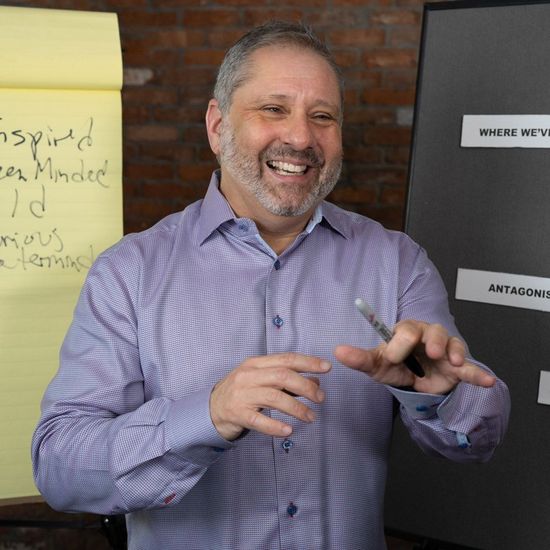
A man is smiling in front of a sign that says biogas americas

We Build the Story Around Your Solution

Most teams we work with don't have a technology problem.

They have a gap between what they've built and how quickly others understand it.

  • Right before a fundraise
  • Ahead of a launch
  • During permitting or public review
  • When turning pilots into paying customers

That's where we come in.


Clarify What Actually Matters

We define the problem so investors, customers, and communities immediately recognize it.

Translate for the People Who Decide

Each audience connects why your technology or project matters to them.

Put It Into the Market

Decks, websites, campaigns, and advocacy that move decisions.

Work That Moved Projects Forward

From early-stage startups to statewide campaigns.

White fuel pump nozzle silhouette over a blue-to-green gradient map of Washington state.
A woman smiles while pumping fuel at a station, overlayed with the text:

Clean Fuel Washington

→ Digital grassroots campaign

→ Result: Legislation passed

A logo featuring a green molecular structure cradled by two stylized leaf shapes on a white background.
Aerial view of an industrial facility with large, dark, round storage tanks and adjacent green wastewater treatment ponds.

Regenis

→ Rebrand & Market positioning

→ Result: National brand & Stronger commercial conversations

A green capital letter
Website header for Washington Evergreen Hydrogen featuring a scenic mountain landscape with a flowing river and forest.

Washington Green Hydrogen Alliance

→ Coalition messaging/Legislator education

→ Result: Legislation passed

A dark blue letter
A woman smiling while fueling a car at a gas station, with Clean Fuel Washington branding and text about cleaner fuels.

Membrion

→ Branding & Simplified complex technology

→ Result: Increased inbound traffic

Companies we’ve worked with have been recognized on TIME’s 250 Most Impactful Greentech Companies.

See How We Build Momentum For Your Project

Why Climate Projects Stall (And How To Move Them Forward)

Short, practical weekly breakdowns on how to build messages that move decisions, from first investor conversations to customer and community approval.

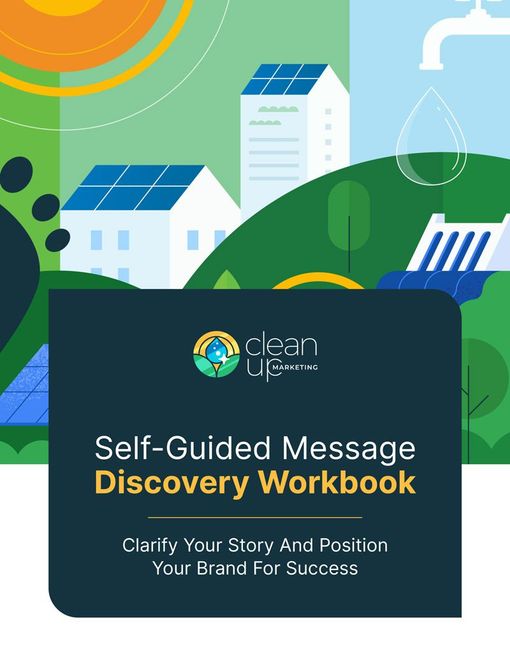
Cover of a

When The Project Makes Sense But No One Moves Forward

The Message Discovery Workbook helps you turn a technical solution into a clear case that investors, customers, and community stakeholders can approve.


  • Turn your solution into a clear reason to act
  • Give internal champions language they can defend in the room
  • Show decision-makers what happens if they move now versus delay

What It Takes To Move Climate Projects Forward

By Michael Grossman March 13, 2026
The Quiet Crisis in Clean Energy Development The United States is experiencing a permitting crisis for renewable energy projects. Between 2018 and 2023, roughly 30% of utility-scale wind and solar projects were canceled during the siting process, often because of local opposition or zoning restrictions. At the same time, opposition is spreading rapidly across the country. Researchers tracking renewable project conflicts have documented: • 498 contested renewable projects across 49 states • 459 counties and municipalities with severe restrictions on renewable development In other words, the challenge facing clean energy deployment is not primarily technological. It is political and social. When a Wind Project Dies Last week, a county commission in Washington State placed a moratorium on new wind energy development. That decision effectively halted the Harvest Hills Wind Project, a project proposed by Vestas, one of the most experienced wind companies in the world. The turbines themselves were not controversial from an engineering standpoint. Wind power is now one of the most mature energy technologies in the global power system. Yet the project still collapsed. The reason lies in the way public opinion forms around infrastructure projects. The New Reality of Local Politics Developers now operate in a communications environment where information spreads instantly and credibility is fragmented. Anyone with a social media account can claim expertise. Algorithms amplify outrage. And misinformation circulates faster than technical explanations. Even claims that wind turbines cause cancer — a theory repeatedly debunked by medical researchers — continue to appear in local debates. Once that narrative spreads within a community, the formal permitting process often becomes the stage for a conflict that has already been decided informally. Why the Old Engagement Model Fails The traditional developer playbook looks transparent on paper: 1. Announce the project 2. Launch a website with a project overview and FAQ 3. Invite residents to public meetings But when residents encounter the project for the first time through zoning notices or political social media posts, the project feels imposed rather than understood. By the time formal stakeholder engagement begins, the conversation often starts from mistrust. Farmers Understand the Problem Most wind and solar projects are located in rural areas. Farmers in those communities know something developers sometimes overlook: You prepare the soil before planting the seed. A farmer who plants before the soil is ready wastes the crop. Community engagement works the same way. If developers wait until a project is announced to begin outreach, the ground is already hardened. Grassroots Outreach Is Cheap Insurance Large energy projects often cost hundreds of millions of dollars, yet communications budgets for those projects are frequently minimal. True grassroots outreach typically costs less than one percent of project value, yet it can determine whether the project survives local politics. That outreach must reach residents where they already gather online: • Pre-roll ads on YouTube • Facebook and Instagram • Twitter/X (yes, even Twitter, because it's still a home for political junkies) • Streaming audio like Spotify and Pandora These platforms allow developers to communicate long before the permitting process begins. Projects Are About People Most renewable project websites emphasize infrastructure. Turbine height. Generation capacity. Interconnection details. Tax base. Those facts matter, but they rarely build trust. Communities want to know something simpler: How does this benefit me? Who in our community supports this? In rural areas, credibility travels through relationships. Residents trust farmers, business owners, and local leaders far more than corporate statements. A project website dominated by technical diagrams tells one story. A project website featuring community voices tells another. A Model That Worked Washington State’s Clean Fuel Standard faced intense opposition from the oil industry, but the policy ultimately passed because our team built a broad coalition before the final legislative fight began. That coalition included communities environmental campaigns often overlook: timber workers, minority businesses, and farmers, who were often the target of oil industry hysterics about gas prices. We spent months educating those communities before asking them to take action. When the opposition campaign intensified, the coalition already existed. The Future of Project Development Clean energy developers have historically thought of themselves as engineering organizations. In today’s political environment, they must also think like community organizers. That means: • Beginning outreach before project announcements • Engaging entire communities, not just formal stakeholders • Communicating through digital channels where residents already gather • Elevating trusted local voices The energy transition depends on infrastructure. But infrastructure ultimately depends on trust.
By Michael Grossman December 9, 2025
Why Marketing Should Start Before the Pitch Most cleantech founders start thinking about marketing after they’ve started raising money. That’s a mistake. Marketing isn’t what happens after the money comes in—it’s what helps attract it in the first place. Investors fund stories that make sense: a clear market, a credible team, and a solution that connects with both customers and policy trends. If you can’t communicate that story before your first pitch meeting, you’re leaving money—and confidence—on the table. Here are five marketing priorities every cleantech startup should tackle before fundraising begins. These aren’t optional. They’re the groundwork that separates founders who struggle to raise from those who attract interest before they even ask. 1. Clarify Your Value Proposition—For Humans, Not Engineers Before you write a single slide or outreach email, you need to explain what you do in plain English. That’s your value proposition. Too many cleantech startups lead with how their technology works instead of what it delivers. Investors aren’t funding science—they’re funding outcomes. Ask yourself: • What specific problem do we solve? • For whom? • What measurable result do we create? If your answer starts with “We’ve developed a proprietary…” you’re already losing them. Your goal is to write one line that any investor, policymaker, or partner could repeat accurately the next day. That’s not marketing fluff—it’s clarity. According to Harvard Business Review , startups that communicate their differentiation in outcome terms rather than product features are 47% more likely to receive initial investor interest. Example: • Weak: “We’ve developed a novel lithium-sulfur chemistry for EV batteries.” • Strong: “We cut EV battery costs by 30% while doubling lifespan through a new chemistry.” Clarity builds credibility. Investors don’t need to know your algorithm—they need to understand your advantage. 2. Define Your Position in the Market Ecosystem Every founder believes they’re unique. The problem is, investors hear that from everyone. Your job is to make uniqueness provable. That starts with positioning—how your solution fits in the broader cleantech ecosystem. Ask: • What market are you entering? • Who else serves it? • Where do you sit on the cost, performance, or scalability curve compared to them? • What’s your superpower that no one else can encroach upon? (Hint: it’s not better, faster, cheaper) Effective positioning doesn’t mean declaring that you have “no competition.” It means showing investors that you understand your competitive landscape better than anyone else. Use language that maps your company to known categories, while highlighting your distinction. Think of it as mental shorthand for investors: • “We’re the Stripe for grid integration.” • “We’re building the Salesforce of decarbonization data.” This kind of framing works because it gives context fast. The U.S. Department of Energy’s Office of Technology Transitions notes that clean energy startups that articulate clear market positioning in their commercialization plans “are significantly more likely to progress to funding and pilot deployment.” If you can’t answer “where do we fit?” clearly, your story sounds like a science project—not a business opportunity. 3. Build Credibility Through Early Proof Points Before investors put in money, they need proof you can deliver. That doesn’t mean full-scale revenue. It means evidence that your solution works and that there’s demand for it. Your marketing should highlight traction metrics—anything that signals credibility: • Pilot results or prototypes tested. • Letters of intent or partnerships. • Policy alignment or grants received. • Data that validates performance. These don’t have to be perfect numbers. They just need to show progress and potential. As PitchBook’s 2024 Venture Monitor reported, investors are increasingly prioritizing “demonstrated market validation and credible customer interest” over early-stage hype in cleantech and climate sectors. Once you have proof, make it visible. Create a one-page summary that uses data and plain language: “Reduced industrial water usage by 40% in pilot deployment.” Even if your pilot is small, clarity in results tells a larger story: you can execute. 4. Build a Consistent Narrative Across All Channels Your pitch deck, website, and LinkedIn page should all tell the same story. If your deck says one thing, your website another, and your team members describe it differently in meetings, you create friction. Investors will notice. Consistency isn’t branding—it’s risk reduction. Inconsistent messaging signals internal confusion. Consistent messaging signals readiness. A 2023 Edelman Trust Barometer Special Report found that startups with unified messages across multiple touchpoints were 3.5× more likely to be perceived as trustworthy by institutional investors. To build consistency, start with a short message hierarchy document that includes: 1. One-line value proposition 2. Long-term vision statement 3. Three supporting proof points (validators) Use it everywhere: your investor materials, your website, your pitch intro, even your email signature. This kind of discipline makes your company look bigger, more coordinated, and more investable—without spending more money. 5. Create a Minimum Viable Marketing Stack Before you raise, you don’t need 20 tools. You need five that keep your outreach organized and your messaging visible. Start with a bare minimum stack that includes: • A CRM (HubSpot Starter or Pipedrive) to track conversations and follow-ups. • A website with your core message and call to action. • A simple email marketing tool (Mailchimp or ConvertKit) to send updates. • Google Analytics or LinkedIn analytics to measure engagement. • Canva or Figma for clean visuals that look professional. That’s it. You can automate and expand later, but this setup ensures you can build relationships, communicate consistently, and measure interest from the start. The Gartner 2024 Marketing Technology Survey found that startups using a simplified tech stack (five tools or fewer) achieved a 22% higher marketing ROI and reduced lead management time by 35%. Keep it lean, track everything, and make sure every tool serves one purpose: clarity. What Happens When You Skip These Steps Here’s what founders get wrong when they go into fundraising without this foundation: • Their pitch decks are reactive, not strategic. They build them around investor questions instead of investor confidence. • Their messaging drifts. Different team members say different things, creating confusion about what’s actually being built. • Their website tells an incomplete story. It might describe technology well, but not the opportunity. • Their proof points are buried. Strong data sits in a grant proposal instead of the first slide. These mistakes aren’t cosmetic—they cost you meetings, momentum, and credibility. Investors want to fund clarity. The earlier you show you can communicate your value simply and consistently, the faster you move from interest to term sheet. What a 30-Day Pre-Fundraising Sprint Looks Like If you’re planning to raise soon, use the next 30 days to tighten your marketing foundation. Week 1: Define your value proposition and messaging hierarchy. Test it with non-technical friends. If they don’t get it, rewrite it. Week 2: Map your competitive landscape and update your website to reflect your positioning and proof points. Week 3: Clean up your visuals and centralize leads in one CRM. Send your first update to investors or partners. Week 4: Align your deck, one-pager, and online presence so every touchpoint tells the same story. You’ll know you’re ready when every line of communication—from your homepage to your opening slide—answers three questions clearly: • What do we do? • Why does it matter? • Why are we the team to solve it? Final Thoughts Fundraising isn’t just a financial exercise—it’s a communication test. Investors want confidence that you understand your market, can articulate your value, and have the operational discipline to execute. Marketing gives you that discipline. By clarifying your message, proving your position, and tightening your systems before you raise, you make it easier for investors to believe in what you’re building. That’s how you shift from chasing capital to attracting it.


Your Project Is Too Important To Stall

If your technology isn’t landing—or your project is losing the narrative—we should talk.

DISCUSS YOUR PROJECT