

America Has Been Here Before: How To Get Clean Energy’s Meta Message Groove Back.
Michael Grossman • April 16, 2026
Why People Said Yes To Wires, Poles, and Towers
America accepted a massive land-altering energy buildout when ordinary people could answer a simple question: What do I get, and why does it matter to my family and my town? The case was tangible. Electricity meant light in the house, water on the farm, refrigeration for food, and equipment that cut drudgery. It was sold as daily life getting better, not as a moral abstraction and not as a distant benefit captured somewhere else.
That is exactly where the current energy-and-data-center story is weak.
AI Is A Lightning Rod, And Clean Energy Is Standing Very Close To The Static
The new Pew energy survey
shows that the national consensus around renewables is thinner than many in the industry want to admit. Overall, 57% of Americans still say the country should prioritize wind and solar over fossil fuels, but that is down from 79% in 2020. Among Republicans and Republican-leaning independents, only 28% now prioritize renewables, while 71% say the priority should be oil, coal, and natural gas. Republicans have also become more skeptical of wind and solar on reliability, cost, and environmental benefit.
At the same time, the data center story is in even worse shape.
Pew found that Americans are much more likely to say data centers are bad for the environment, home energy costs, and nearby quality of life than good for any of those things. The gaps are not close: 39% say data centers are mostly bad for the environment versus 4% who say mostly good; 38% say bad for home energy costs versus 6% good; 30% say bad for quality of life nearby versus 6% good. Even the upside categories are soft. Only 25% say data centers are mostly good for local jobs, and 23% say mostly good for local tax revenue.
The Washington Post–Schar School polling
out of Virginia (the state with the most data centers) is even more alarming because it captures what happens when people live next to the buildout rather than read about it in the abstract. Support for a new data center in one’s community fell from 69% in 2023 to 35% this year. In that same poll, Virginia voters were more likely to say data centers hurt the local environment than help it, 59% to 14, and more likely to say they raise home energy and utility bills than lower them, 57% to 14. They also saw harm on household property taxes by a 47% to 20 margin, even while acknowledging some upside for jobs and county funding.
Now put those two datasets together and the political problem comes into focus.
The Numbers Explain What’s Happening In The Room
Renewables are losing ground with the red half of the country.
Data centers already carry a weak social license. AI carries its own credibility problem because too many people hear “productivity” and translate it into “my job gets cheaper.” Gallup’s latest workplace polling
found that 18% of U.S. employees think it is at least somewhat likely their job will be eliminated within five years by technology such as automation or AI, and that rises to 23% in organizations where AI has already been implemented.
The Narrative That Follows Every New Megawatt
That creates a dangerous narrative chain:
A developer wants more power infrastructure.
The public hears that the power is feeding data centers.
The public hears that data centers are feeding AI.
The public hears that AI is coming for jobs.
Now the substation, solar field, transmission line, or gas peaker is no longer a grid asset. It becomes local evidence that someone else’s machine economy is being built in your backyard.
That is how narratives take hold, and the neural pathways for processing fear far outnumber the pathways for hope. And once that thread is in people’s heads, “this powers your smartphone” is nowhere near enough. So is “we’ll write a check for a playground.” Those are side benefits. They do not answer the underlying question of whether the bargain is fair.
The Electrification Bargain Is A Template
The rural electrification parallel matters because it shows what a successful public bargain looks like.
People accepted towers, poles, wires, substations, rights-of-way, and public financing when the project could be tied directly to their own household economy and to the survival of their community. They also accepted it through trusted local structures. Cooperatives mattered because the community was not being told to absorb the footprint for someone else’s gain. The community was part of the system itself.
That is what the industry is missing now.
The Missing Meta Message
It does not have a persuasive meta-message for conservative and rural audiences, and it barely has one for data centers at all.
The missing message is not climate. It is not innovation. It is not “the future.” It is not “AI will cure cancer.”
The missing message is a local bargain stated in plain English:
You are being asked to host physical infrastructure. Here is what your town gets in return. Here is what your household gets in return. Here is how we keep rates reliable and fair. Here is how we protect land, roads, water, and tax base. Here is what stays local. Here is who is accountable if the developer fails to deliver.
That is not glamorous, but it is how durable support gets built.
Facts & Press Releases Won’t Carry The Day
In a bifurcated media ecosystem, that case also has to be carried differently than it was in the era of rural electrification. Back then, the work included local meetings, local co-ops, extension-style education, and trusted community validators. Today, local news is weaker, social platforms reward emotional content, and misinformation moves faster through self-selected ideological clusters.
Researchers at UNC’s Center for Information, Technology, and Public Life
warn that the decline of local news has created an information vacuum where misinformation flourishes, while social platforms intensify polarization and spread falsehoods more efficiently.
That means the industry cannot treat public support as a press-release problem.
It needs campaign discipline.
Audience segmentation. Trusted validators. Repetition. Local proof. Rapid rebuttal. Direct channels through email, text, Facebook groups, church networks, farm organizations, chambers, school communities, and county-level messengers who already have social permission to speak. The point is not simply to “correct misinformation.” The point is to fill the meaning vacuum before opponents do.
The Message Must Be Delivered By The Right Messenger
A non-profit called Renewable Energy Farmers
is spot on for who should be delivering these messages. The idea is sound because it starts from the right premise: rural America is more likely to hear a credible case from people who live on the land than from an executive flown in for a hearing.
Your bridge across the urban-rural divide will not be built by asking rural communities to subsidize metropolitan data demand out of civic duty. It gets built when the project is tied to local income, local tax stability, and local reliability, but most of all, local dignity.

Selling complex technology takes more than academic rigor. Founders need the relationship skills from high school to win over investors and customers.

When your market has dozens, not thousands, of potential customers, conventional GTM tactics break down. Learn how to market when every prospect matters.
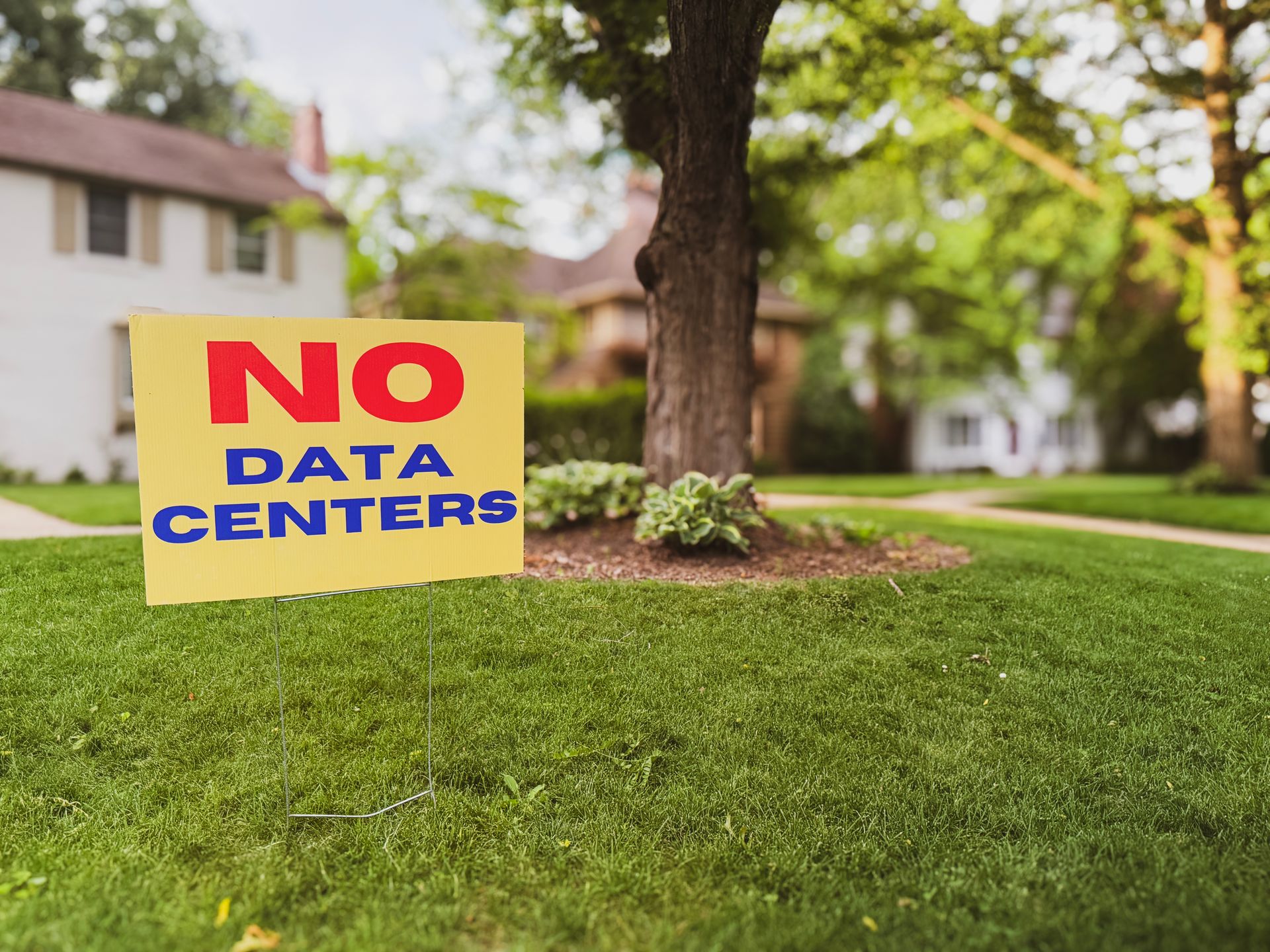
Labor Day traditionally means the start of political campaign season.

PitchBook’s Q2 2026 data confirms what climate tech investors value: affordability, reliability, resilience and energy independence. Make those benefits your message.

Align marketing and sales around a clear message that helps risk-averse customers understand your complex technology and make the case for change.
America Connects is the data center industry's answer to entrenched public opposition. Before the campaign expands, here's some unsolicited advice.

Climate and deep tech companies sell optimism. Learn why a dark website can make investors and customers hesitate before they read a word.
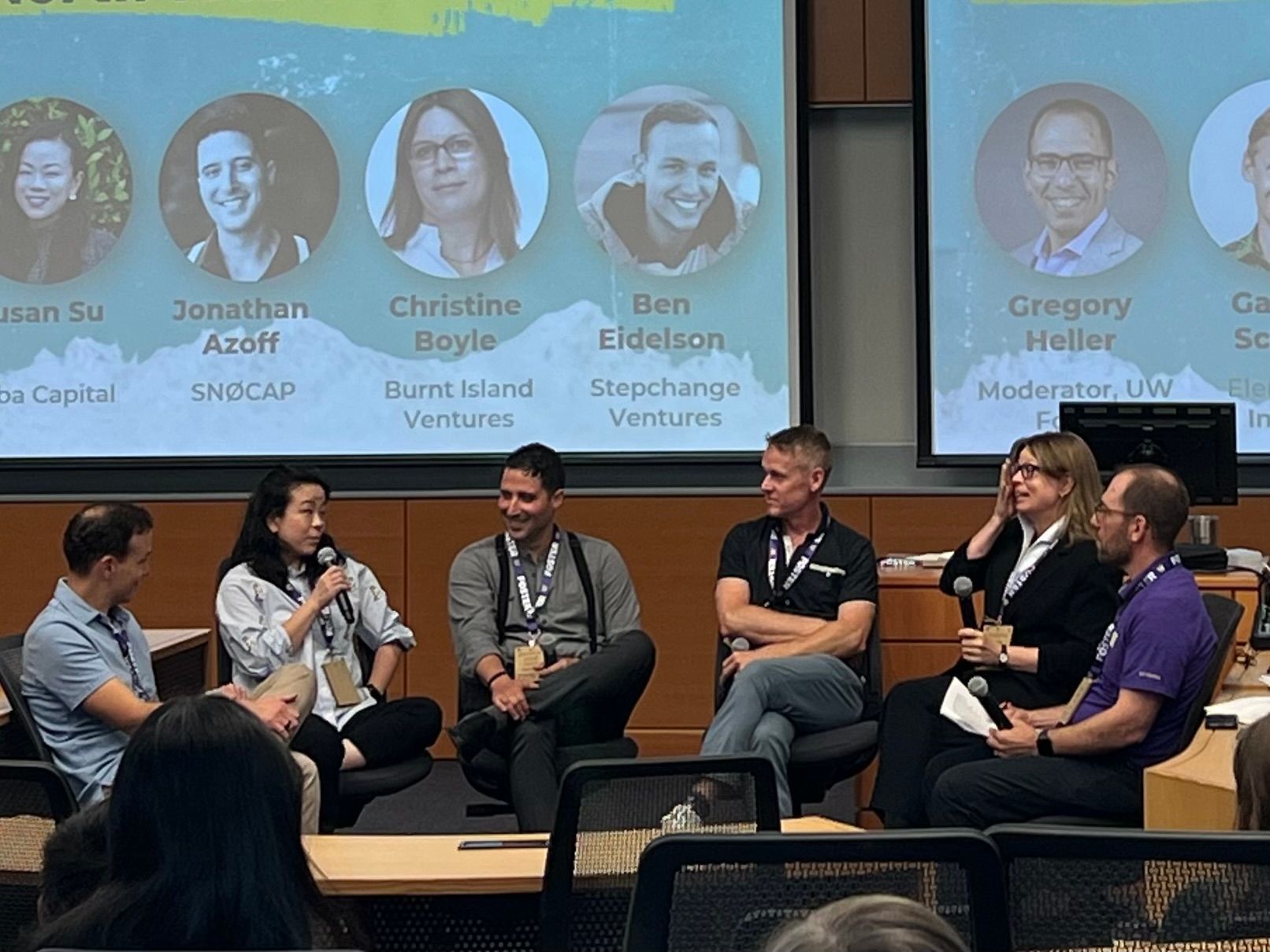
Venture capital is more concentrated than ever. Learn why investor attention has become scarce and how it changes the way investors review pitch decks.
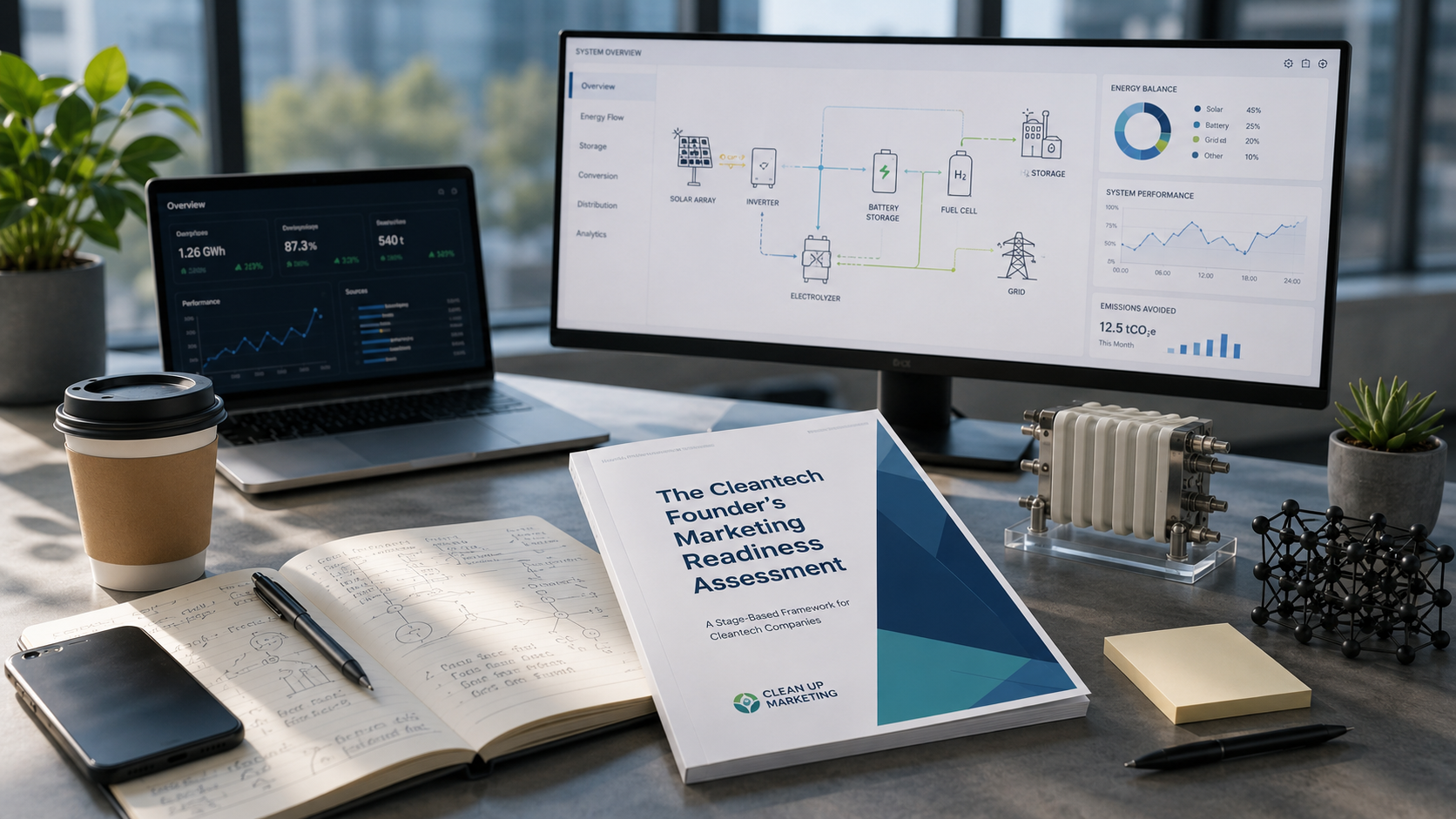
Download our free Cleantech Marketing Readiness Assessment to evaluate your messaging, positioning, website, and go-to-market readiness before you scale.