

The Power Of One Clear Promise
Michael Grossman • April 12, 2026
Your UVP Is Not a List: Why One Clear Promise Beats Everything Else in Climate Tech Marketing
It took you years to engineer your solution. It seems counterintuitive to reduce it to a single promise. But that’s the key to scaling your cleantech company.
Not everyone is a wordsmith, and you don’t have to be if your target audience can answer a simple question: What does this company actually do for someone like me?
A unique value proposition is singular. The moment it becomes a list, it stops functioning as a value proposition and turns into a catalog.
Marketing is not about stacking benefits. It is about helping someone understand one outcome clearly enough to repeat it.
That formula for success has not changed, even though the communication environment around it has dramatically changed over the last 30 years.
Your Buyer Is Not Reading Your Copy the Way You Wrote It
Let’s use a website as an example of why less is more. Typically, people trying to create their own website write as if their audience will move through the page from top to bottom, taking in each sentence, connecting the dots, and arriving at a clear understanding by the end.
That is not how people behave.
They scan. They look for signals. They try to answer one question as quickly as possible: Is this relevant to me?
Jakob Nielsen’s research on how people read on the web has consistently shown this. Users follow predictable scanning patterns and pick out fragments rather than reading full passages.
That behavior matters more in climate tech than in most categories.
You are not offering a familiar product with a known buying process. You are asking someone to consider a change. That change introduces risk. It requires internal explanation. It often requires approval from people who are not in the first conversation.
If the person on your website cannot reduce what you do to one sentence, they cannot carry it forward. They cannot explain it internally. They cannot advocate for it.
At that point, the conversation stalls.
Why More Information Creates Less Clarity
There is a belief that if you say more, you increase the chances that something will resonate.
In practice, the opposite happens.
When you introduce multiple outcomes, multiple audiences, and multiple claims at the same level, you remove any sense of priority. The reader has no signal for what matters most, so nothing stands out.
Claude Hopkins addressed this directly in Scientific Advertising. He argued that effective advertising rests on a single idea that can be understood quickly and acted on immediately.
The famed father of advertising philosophy, David Ogilvy, reinforced the same principle
from a different angle. He wrote that the headline carries the majority of the impact because it determines whether anything else will be read.
If that headline tries to communicate several ideas at once, it fails at its primary job.
Climate tech companies often write headlines that attempt to summarize the entire platform. The result is language that feels comprehensive but lands as indistinct.
A buyer does not remember a paragraph that tries to cover every advantage. They remember a sentence that captures one outcome that matters to them.
The One-Sentence Test
There is a simple way to determine whether your message is working.
Ask a direct question.
If someone could only remember one thing about what you do, what would you want that to be?
Write the answer in one sentence.
The sentence should describe a real outcome for a specific buyer. It should not try to cover every capability. It should not attempt to impress. It should reflect the most important change your product creates.
Once you have that sentence, test your existing materials against it.
Open your homepage. Read the headline and subhead. Do they communicate that outcome?
Look at your last five emails. Do they reinforce that same idea?
Scroll through your recent posts. Would someone who sees one of them understand what you do without additional context? If the answer is no, the issue is not that you need more content. The issue is that your message is not anchored.
This is where many teams hesitate. Narrowing the message feels like reducing the scope of what the company can do. In practice, it clarifies where the company wins.
What People Actually Remember
Human memory does not store information as a list of features. It stores simplified associations.
Al Ries and Jack Trout explained this in Positioning: The Battle for Your Mind. They described how the mind assigns a limited number of positions within a category, and how the companies that win are the ones that claim a clear, singular idea and reinforce it over time.
https://www.ries.com/books/positioning-the-battle-for-your-mind/
This pattern shows up across industries. Certain brands become shorthand for a single outcome because they chose to focus on one idea and repeat it until it became automatic.
- Volvo equals safety.
- FedEx equals overnight delivery.
- Intel equals “inside.”
These companies had more to say, but they chose not to because memory is a bottleneck.
Climate tech companies often resist this approach because the underlying technology spans multiple applications. The hesitation is understandable. The business may serve different segments. The product may deliver several forms of value. Regardless, the buyer still needs a way to understand it quickly. If they cannot form that understanding, they move on.
Choosing the Outcome That Moves the Deal
A clear value proposition does not start with everything your product can do. It starts with the outcome that matters most to the buyer at the moment they are making a decision.
Consider a company developing a lower-carbon cement alternative.
The full story might include emissions reduction, cost advantages, performance improvements, and compatibility across use cases.
Those points are valid. There are also too many to lead with.
A focused message might center on one outcome:
We reduce the cost of low-carbon concrete.
That sentence creates a clear entry point for a specific audience. It does not deny the existence of other benefits. It establishes priority, which is a singular word, not a plural.
For a different audience, the priority may shift:
We help developers meet new building codes without increasing project cost.
Each version reflects the same underlying capability. Each version selects a different outcome based on what drives action for that audience.
What does not work is combining them into a single statement that tries to satisfy both at once.
When everything is presented as equally important, nothing is.
Repetition Builds Understanding
Once the sentence is defined, the work is not to refine it endlessly. The work is to use it consistently.
Place it in your headline. Use it in your pitch. Repeat it in your emails. Reinforce it in your content.
Ogilvy pushed this point because many teams confuse variation with effectiveness. Changing the language too often resets the learning process for the audience. Consistency allows recognition to build.
Your audience is not tracking every piece of content you publish. They encounter fragments over time. Repetition is how those fragments connect into a coherent understanding.
If you’re a creator, it’s understandable to see repetition as a limitation, but it’s how memory works. Ignore it at your peril.
What This Means for Climate Tech Companies
In climate tech, a scattered message does more than create confusion. It increases perceived risk.
Buyers are already evaluating whether to change a process, introduce a new material, or adopt a new system. They are considering how that decision will be received internally and what will happen if it does not work as expected.
A clear message reduces the cognitive load required to evaluate that decision, while a scattered message adds to it. This has a direct impact on how quickly deals move. If your internal champion cannot explain what you do in one sentence, they cannot build support. Without support, the deal slows or stops.
One Clear Promise
The simplest way to be understood has not changed. Define one clear promise. Make sure it reflects a real outcome for your buyer.
Then make it visible everywhere your company shows up. Everything else supports that promise.
Detailed explanations, technical validation, and case studies all matter. They help a buyer justify a decision once they are engaged, but they don’t replace the need for a clear starting point.
If your message feels scattered today, more content isn’t the answer. Go back to the basics. Start with a single sentence. Make it precise. Make it true. Then make it consistent.
Because the companies that get remembered are not the ones that say the most. They are the ones that make one idea clear enough that someone else can carry it forward.
A practical guide for cleantech founders to test whether their message, website, pitch, and marketing systems are ready to support funding, pilots, and growth.

Everyone is hiring for “GTM,” but few define it clearly. Here’s what go-to-market actually means in cleantech, where it fits, and why it matters for revenue.

Scientists and engineers are trained for deep focus. Investors and customers skim screens. Here’s why cleantech founders lose attention—and how to make their technology easier to remember.

Your climate tech pitch is getting interest—but no second meeting. Here’s why investors and pilot partners aren’t moving forward, and how to build a message that makes the business case clear and drives real decisions.

Most cleantech companies compete on performance. The ones that win become the reference point everyone else is compared to. Here’s how category leadership actually works—and why clarity, not specs, determines who gets remembered.
Support for renewables is weakening, and data centers face backlash. Here’s why energy projects are getting caught in the crossfire—and what developers must change to win approval.
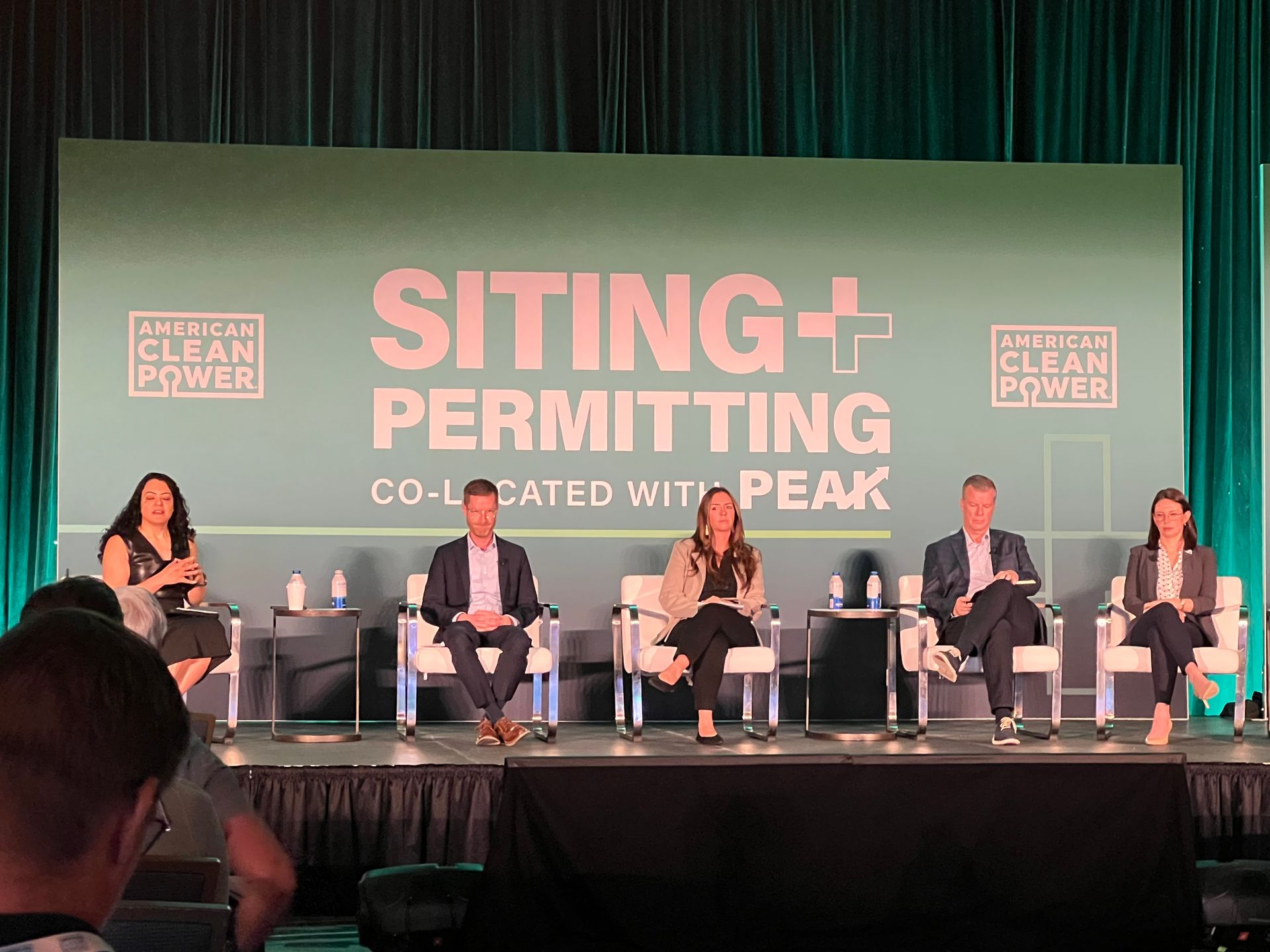
Why clean energy projects fail permitting in 2026—and what developers must change: early outreach, local messengers, and digital campaigns that define the fight before opposition does.
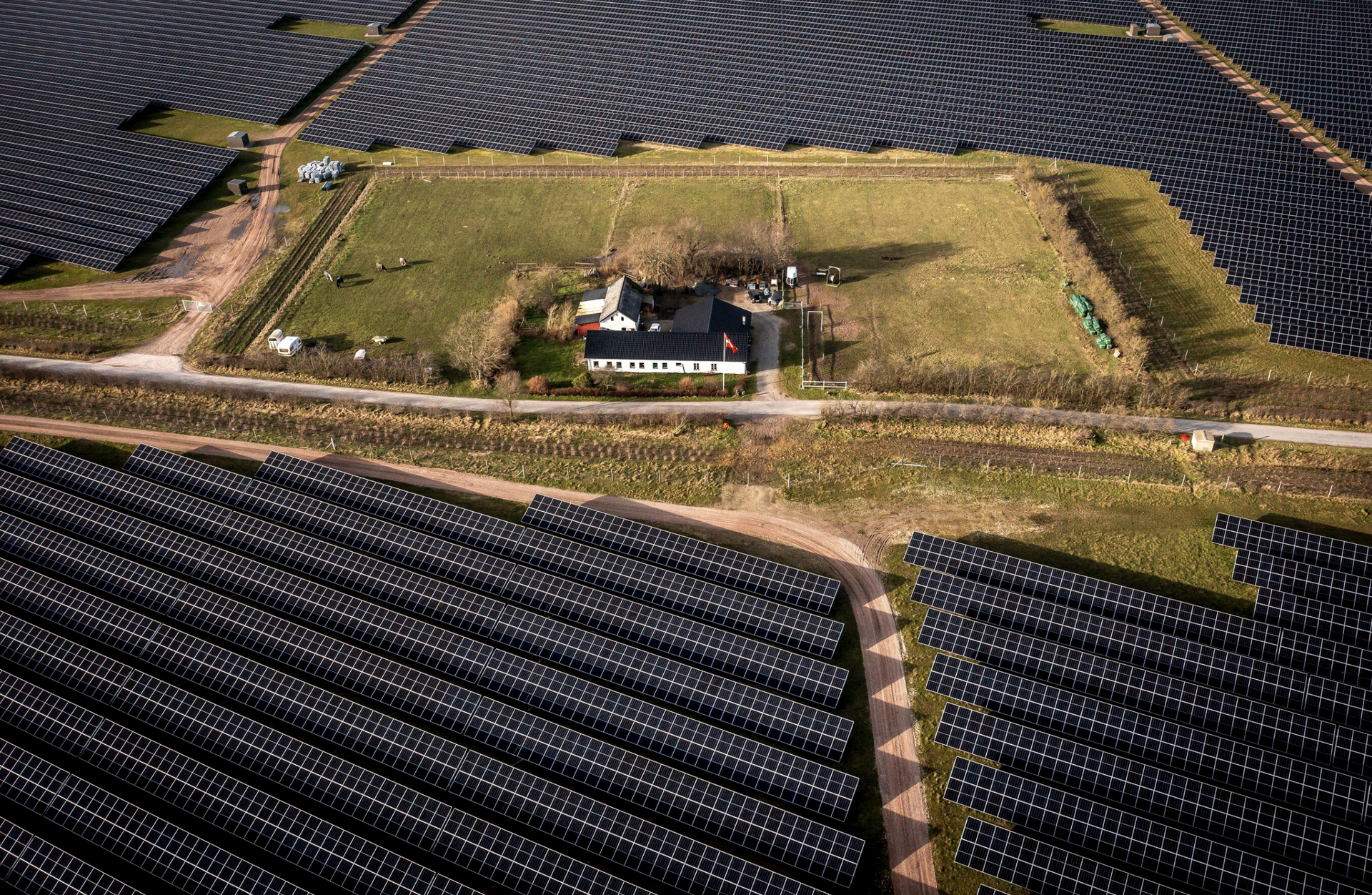
Denmark leads on climate—but even there, utility-scale solar is facing backlash. The community fault lines around clean energy projects worldwide can be overcome.

Clean energy developers do not lose projects because their technology fails. They lose projects because they misunderstand how decisions get made in the communities where those projects are proposed. If you spend enough time around project development, you start to see the same pattern. A site pencils. The resource is there. Interconnection works. Capital is lined up. Then the project enters the public process and something shifts. Opposition forms. Local officials hesitate. The project stalls or disappears. That outcome is not rare. Roughly one out of every three large clean energy projects in the United States never reaches construction . At the same time, the environment around these projects is getting harder. Research from the Sabin Center for Climate Change Law at Columbia University tracks hundreds of renewable energy projects across dozens of states facing organized opposition, along with a growing number of local laws restricting development. Across the country, local resistance is no longer episodic. It is structural. Most developers respond by trying to improve how they explain their projects. That is not where the problem sits. The most common messaging mistake clean energy developers make is this: They treat communication as explanation when it is actually coalition building. The Illusion Of Stakeholder Engagement Developers often approach communication by identifying “stakeholders” and building a plan to engage them. The list is familiar. Elected officials, regulators, adjacent landowners, business groups. Those people matter, but they are not the community. Communities are not organized through formal roles. They are organized through trust . Influence sits with people who do not appear on stakeholder maps. A pastor, a co-op manager, a respected farmer, a small business owner. These are the people others listen to when they are deciding what a project means. When engagement is limited to formal stakeholders, developers miss the informal networks where opinions actually form. That gap is where opposition gains ground. Developers Try To Be The Messenger Even when developers engage early, they often assume they should be the ones delivering the message. They have the data. They understand the project. They can explain the benefits. That logic makes sense internally. It is less effective externally. People trust those who share their lived experience . A developer entering from outside the community is asking for trust before it exists. A local voice does not need to make that same ask. This is not a communications nuance. It is the difference between being heard and being discounted. Projects that move forward tend to have credible local voices who can explain the project in terms that make sense to their neighbors. Projects that fail often rely on the developer to carry that burden alone. What is actually at stake These dynamics are easy to underestimate because they are not reflected in financial models. A utility-scale wind or solar project in the 50 to 100 megawatt range typically requires $75 million to $200 million in upfront capital, depending on technology, location, and interconnection costs. Over a 20 to 30 year lifespan, those projects can generate hundreds of millions of dollars in contracted revenue, particularly when backed by long-term power purchase agreements. When a project fails at the permitting stage, that capital is not redeployed cleanly. Time is lost. Development costs are written off. Market windows close. This is not a marginal issue. It is a core risk to the business model. The New Pressure: Data Centers The stakes are rising because demand is rising. The rapid growth of artificial intelligence and cloud computing is driving a surge in data center development across the United States. These facilities require enormous and continuous electricity loads. Recent analysis from Pew Research Center notes that data center electricity consumption in the U.S. is expected to increase significantly as AI adoption expands, placing new pressure on regional grids. At the same time, research from Columbia Business School highlights a growing race to secure power for these facilities, with developers competing for access to clean and reliable electricity. Additional analysis from Environmental and Energy Study Institute warns that data center demand is already reshaping grid planning and could complicate climate goals if new supply does not come online fast enough. This creates a collision. On one side, data center developers need large volumes of electricity, increasingly from low-carbon sources. On the other, local opposition is making it harder to build the very projects required to meet that demand. The result is a tightening constraint on both infrastructure and timelines. Coalition Building As A Development Function In this environment, coalition building is not a communications add-on. It is a core development function. Projects that succeed tend to follow a different sequence. They identify credible local voices early. They invest time in understanding how the project intersects with local concerns. They allow the community to shape how the project is discussed rather than introducing a fully formed narrative late in the process. This work often happens before a project is publicly announced. It rarely appears in investor updates. It is difficult to quantify. It is also one of the clearest predictors of whether a project moves forward. A Different Way To Think About Messaging If you treat messaging as explanation, your goal is clarity. You want people to understand what the project is and why it matters. If you treat messaging as coalition building, your goal is different. You are working to ensure that when the project becomes public, there are already trusted voices within the community who understand it, can speak to it, and see a place for it. That shift changes everything. It changes who speaks. It changes when conversations begin. It changes how opposition is received. The Broader Implication The clean energy transition is often framed as a technological and financial challenge. Those elements matter. Progress on both has been significant. At the same time, the growing number of local restrictions, the scale of organized opposition, and the surge in electricity demand from data centers point to a different constraint. The limiting factor is not always whether a project can be built. It is whether a community is prepared to accept it. Developers who recognize that early and build coalitions accordingly get projects built. Developers who do not often find themselves trying to explain a project after the decision has already been made.